What history of public wives can tell us about why Kate Middleton matters so much to the future of the monarchy
In January, when Kensington Palace announced that Catherine, the Princess of Wales, also known as Kate, would take a medical leave from royal public duties, the initial outcry was one of surprise and support. In the weeks since, the internet has been besieged by rumors and conspiracy theories, but what was made clear was Kate’s vital importance to the monarchy. Kate has long been a draw for fans, and her popularity directly translates into support for the monarchy itself. Her absence, combined with King Charles’ suspension of public duties due to cancer treatment, has caused many Royal watchers to go: “Who’s Left?”. That a woman who married into the royal family is seen as of equal importance by the public with the King and the heir to the throne is striking.
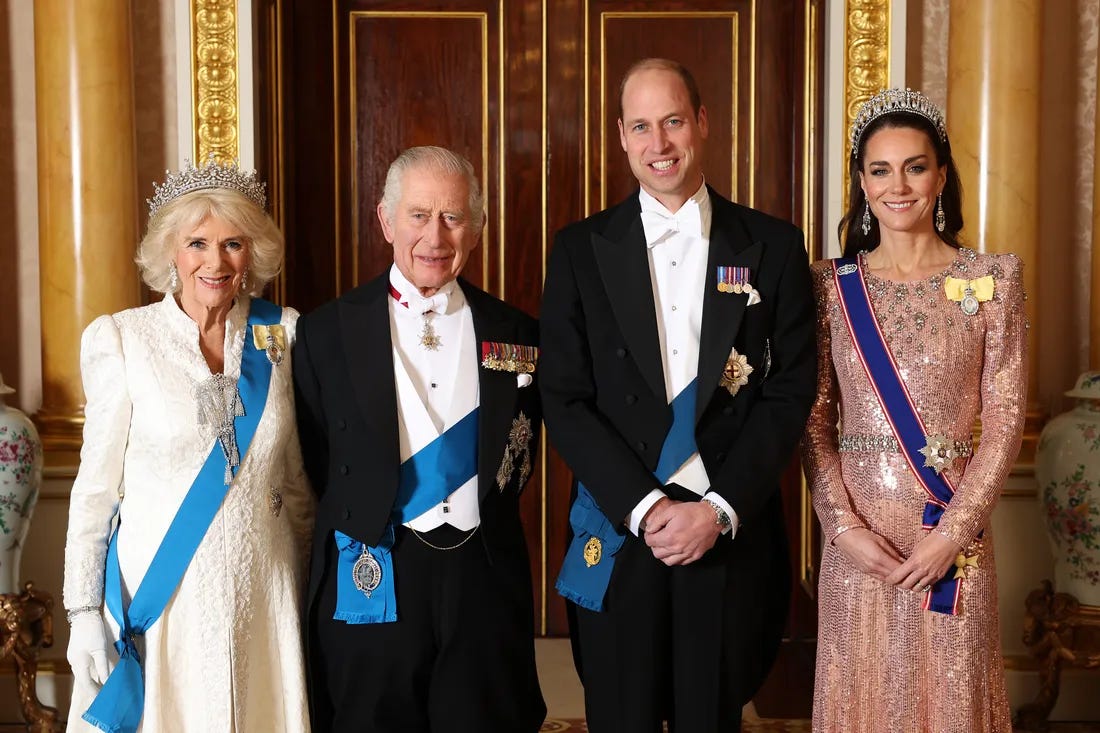
Royal correspondent, Victoria Murphy, reflected on why Kate has become so key to the future of the British monarchy. It’s not just because of her age, her fashion sense, or her status as a commoner, all of which has earned her admirers. Murphy elaborated that it’s her ability to put people at ease and a “sincerity that has made countless people come away from an interaction feeling like she really cares.” Her dedication to her charity work has gained her numerous supporters, as has her genuineness and authenticity. Yet Kate’s approach is nothing new, and in fact was the standard playbook for diplomatic wives during the Cold War.
There are few roles today like Royal spouses; in the U.S. the only one that stands out is that of the First Lady and Second Gentleman. But historically “public wives” were much more common, and outside of the Prince Albert or Prince Philip in the British royals, predominantly women until the 20th century. Every wife of a politician, diplomat, clergy, and businessman had a role to play in the community. They were surrogates for their husband, able to connect with women, and were responsible for morale and cohesiveness. Much like the British royals, they devoted their time to charity, social causes, and representational activities.
Until 1972, the wives of American diplomats (and there were no husbands as female diplomats were forced to resign upon marriage), were required to work unpaid for the U.S. foreign service around the world as part of a “two for the price of one” policy. This policy was not unofficial. Diplomatic wives were evaluated on their husbands’ performance evaluations and were placed in the embassy hierarchy with a rank derived from her husband and directly reported to the wives of their husbands’ superiors. Congressional leaders and the Vice President were quoted as referring to the brilliance of this bargain.
During the Cold War, diplomatic wives had a particularly important role to play, similar to that of Kate Middleton. They were representatives of their country, their government, and American womanhood. They symbolized the vitality of America, something that has fallen particularly on the Wales’s shoulders in the last few years. As of next year, the Wales’s will be the only working royals under the age of 60.
Like in the royal family, there was no other career at the time in which wives could contribute so much to their husband’s career, so much in fact that it became one for themselves as well. Ambassador Harlan Cleveland took it a step farther by declaring diplomatic wives often “make or break their husbands’ career—and U.S. foreign policy as well”.
One popular handbook for diplomatic wives called them “window-dressing” and encouraged them to pay attention to the importance of fashion, but like Kate, diplomatic wives were so much more than an accessory. They were in actuality soft power diplomats. Their work ranged from that as a diplomatic hostess to teaching English; from participating in cultural exchange and diplomacy to volunteering in support of public health projects. Like the British Royals, they picked social causes that would reflect positively on their country and always had a smile at a wide range of public events. As I’ve argued, the British Royal Family have an important role to play in public diplomacy, at home and abroad, that cannot be easily replaced with officials.
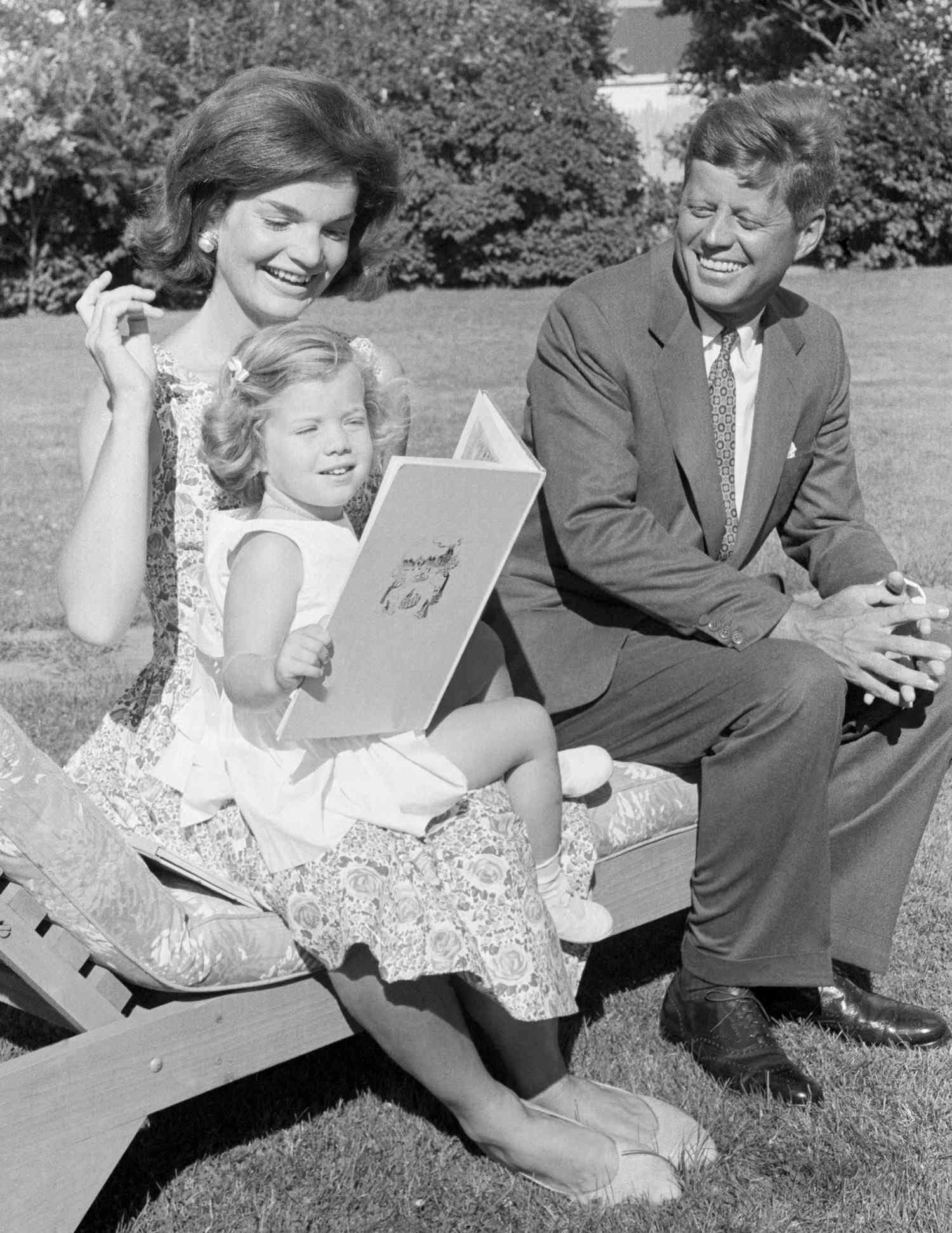
Most importantly these public wives contributed to their husband’s image, as character of a good leader and representative is closely related to morality. As the scholar Joanna Gillespie has argued, a man with a loving and dutiful wife, must therefore by worthy of public trust, no matter if it’s true or not. Would John F. Kennedy have been so popular if his infidelity on his popular wife was well known at the time? Look at how King Charles’ own public image was closely tied to his relationship with his wife’s for decades, even after her passing. For William to be seen as a “worthy” future king, he needs a loving and supportive wife.
During McCarthyism and the Lavender Scare, the imagery of wives was used to combat rumors of homosexuality. While the Red Scare focused on identifying communists within government and the media, the Lavender Scare was a parallel movement to remove homosexual government employees from service. To McCarthy, homosexuality was ubiquitous to communism because of the risk of “disloyalty” to the nation. The Foreign Service was a particular target, due to the nature of their work abroad, and a number of diplomats were caught up in the scandal- including Julia Child’s husband.
Diplomatic wives played an important role countering McCarthy’s narrative. When Chip Bohlen was nominated Ambassador to the Soviet Union by President Eisenhower in 1953, Secretary of State John Foster Dulles did not want to support the nomination because of a false accusation that Bohlen was gay and had entertained left-wing houseguests. After the hearing Bohlen was set to head to the USSR alone, as his wife would follow a few days later. Dulles confronted Bohlen, saying, “There were some rumors in some of your files about immoral behavior,” adding “it would look better if your wife was with you.” The wife would act as a moral compass for the potentially gay and leftist future Ambassador in the public eye. Dulles thought it would be wiser for Avis to accompany her husband—for himself as Secretary of State, the President, and the image of the American public.
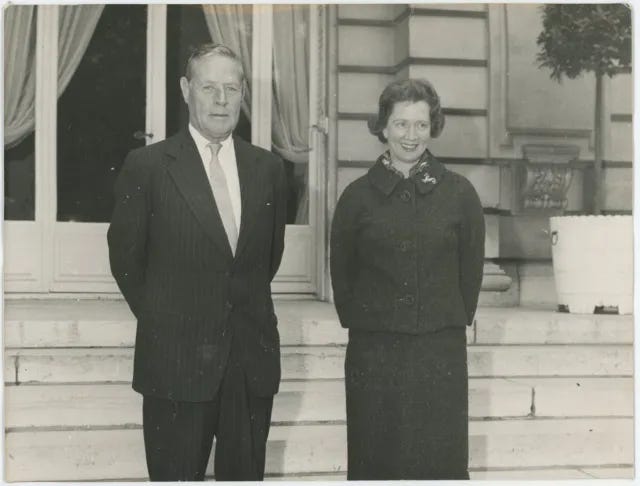
Diplomatic wives were seen as so crucial to their husband’s success that when Dulles was planning to nominate Senator John Sherman Cooper as Ambassador to India in 1955, he was told he needed a wife and a helpmate before he could be nominated. Lorraine Cooper, who spoke five languages and followed politics carefully, was noted for her diplomatic skills both in gaining her husband’s support from Indian leaders like Nehru but also in her ability to set everyday people at ease. She once joked how young children were more interested in her and trying an American brownie than they were in meeting her husband. The Princess of Wales shares that same magnetism.
A modern monarchy can only survive if its popular. Like in diplomacy, what the royals say and do, either earn them goodwill or criticism, but they have to be seen to be supported and are therefore constantly in the public eye. The recent photoshop scandal has underlined how important being public in the right way is to the monarchy. They are constantly on display and one wrong step can go from much adored to distrustful in seconds. One diplomatic wife commented that being a diplomat’s wife was akin to being in a large fishbowl all of the time, a sentiment I’m sure the Royals understand.
Alexandra is a historian and writer. She holds a PhD from the London School of Economics and Political Science in international history. She is also a recognized expert on the British royal family and soft power diplomacy, having been published in outlets such as Chatham House’s magazine, and has appeared on the BBC, Wall Street Journal, Al-Jazeera, Sky News and different European news outlets. At present, she is writing a book on American diplomatic wives in the Cold War.
 Alexandra Penler
Leave a comment